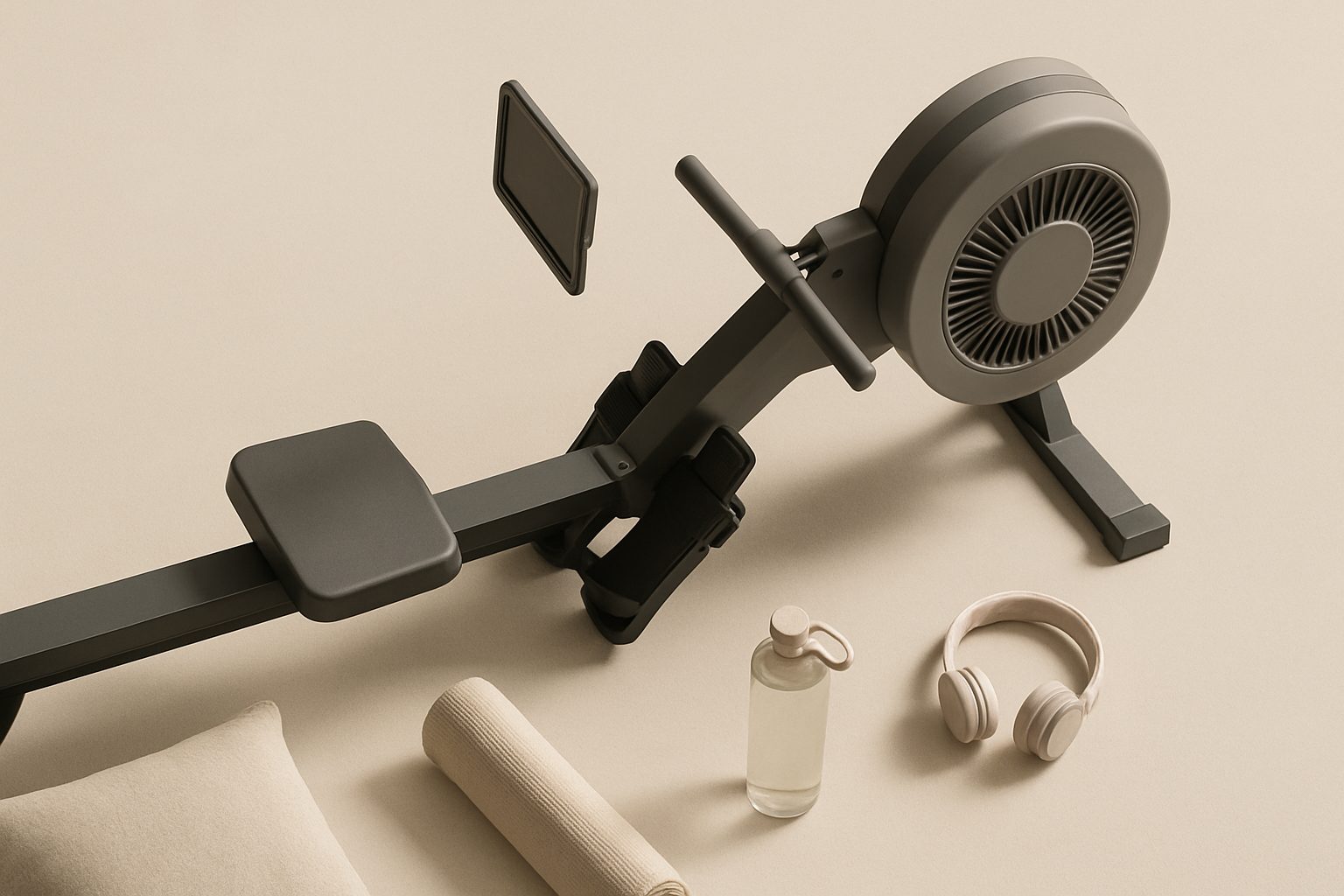
Concept2 RowErg Review UK 2025: Is It Worth the £900+ Price Tag?
When you're shopping for a home rowing machine in the UK, Concept2's RowErg lands on nearly every shortlist. At £900–£1,100 depending on where you buy, it's not a casual purchase. I've spent several months with one in a garage gym setup, and I'll walk you through exactly what you get for that outlay.
Build Quality and Design
The RowErg feels engineered to last. The frame is solid cast iron and aluminium—no wobble during intense pulls, no creaking after six months of regular use. It's genuinely industrial in a way many home machines aren't. The seat slides smoothly on a nickel-plated rail, and the footplate is adjustable for different leg lengths, which matters more than you'd think when you're rowing regularly.
At 96kg, it's heavy enough to feel stable but light enough that one person can move it with effort. The dimensions are 213cm long and 61cm wide—that's more floor space than a Peloton bike, so measure your room first.
Build-wise, this is the same machine used in CrossFit boxes and rowing clubs. That's both reassuring and a hint at the design philosophy: function first, features second.
The PM5 Monitor
Concept2's PM5 is the heart of the machine, and it's genuinely good. It's not fancy—there's no touchscreen, no Netflix integration—but it does what it promises without glitches. You can programme intervals, track splits, log your workouts, and sync to Concept2's logbook online. The display is clear even in poor lighting.
One honest note: the PM5 adds about £150 to the cost. A few retailers sell the RowErg with the older PM4, which is slightly cheaper but less flexible for programming. If you're planning to follow structured programmes (Concept2 publishes free ones), the PM5 is worth the premium.
The monitor runs on AA batteries (not plug-in), which is annoyingly retro but also means you're not tethered to a wall socket.
Noise and Smoothness
This is where rowing machines divide into camps. The RowErg uses a flywheel with air resistance—the same principle as Concept2's rowing tank machines, just in a compact form. When you pull, it's smooth, almost hypnotic. The machine gets quieter the longer you row because you're settling into rhythm.
However, it's not silent. During hard sprints, the flywheel whirrs audibly. It won't upset neighbours through a wall (unlike a treadmill), but if your home gym is directly above someone's bedroom, they'll notice. A rubber mat underneath helps.
If noise is a deal-breaker, WaterRower machines are noticeably quieter, though they're also pricier and require more maintenance (water needs occasional treatment).
Comparison: WaterRower D
The WaterRower D is the RowErg's main competitor at similar price points (roughly £1,200–£1,500). Here's where they differ:
RowErg advantages: Lighter, more compact, lower maintenance, faster shipping, better integration with training apps, cheaper entry point.
WaterRower D advantages: Quieter, smoother feel (some users strongly prefer it), beautiful wooden frame, marginally better resale value in some markets.
In honest terms, if you want a machine you'll program workouts on and track progression obsessively, the RowErg suits you. If you prefer rowing that feels more like being on water and don't mind spending extra, WaterRower is the choice. Both will last decades with basic care.
Resale Value
This matters. A RowErg in decent condition sells for £600–£750 second-hand, typically within 4–8 weeks of listing. That's reasonable depreciation for a £900+ machine and reflects strong demand. WaterRower machines hold slightly better value, but Concept2's reputation keeps them liquid if you need to sell.
What You're Actually Getting
The RowErg is a precision fitness tool. You're not paying for novelty or app integration; you're paying for a machine that will handle 5am sprints and 60-minute steady-state sessions for 15+ years without faltering. It's professional equipment scaled to homes.
Daily use is straightforward: step on, strap in, pull. Maintenance is minimal—occasional light oil on the rail, that's it.
The Real Drawback
The price. Full stop. You can buy a decent rowing machine for £200–£400, and it'll give you a workout. The RowErg is £900+ because Concept2 doesn't cut corners and doesn't discount. That premium buys durability and consistency, but it's a premium nonetheless.
If you're testing whether you actually like rowing, start cheaper. If you've already rowed and know you'll use this 3–4 times a week, the RowErg makes sense.
Verdict
Buy if you're serious about rowing for the long term, have the budget, and want a machine that'll remain reliable for years. Skip if you're still figuring out whether rowing suits you, or if noise is a genuine problem in your space. The Concept2 RowErg is genuinely excellent, but "excellent" doesn't automatically mean "right for you." That distinction matters at this price point.
More options
- Concept2 RowErg Indoor Rowing Machine (Amazon UK)
- WaterRower Natural Rowing Machine (Ash Wood) (Amazon UK)
- Bluefin Fitness Sprint 2.0 Magnetic Rowing Machine (Amazon UK)
- JLL R200 Home Rowing Machine (Amazon UK)
- Jorvik Tri-Mode Water Rowing Machine (Amazon UK)