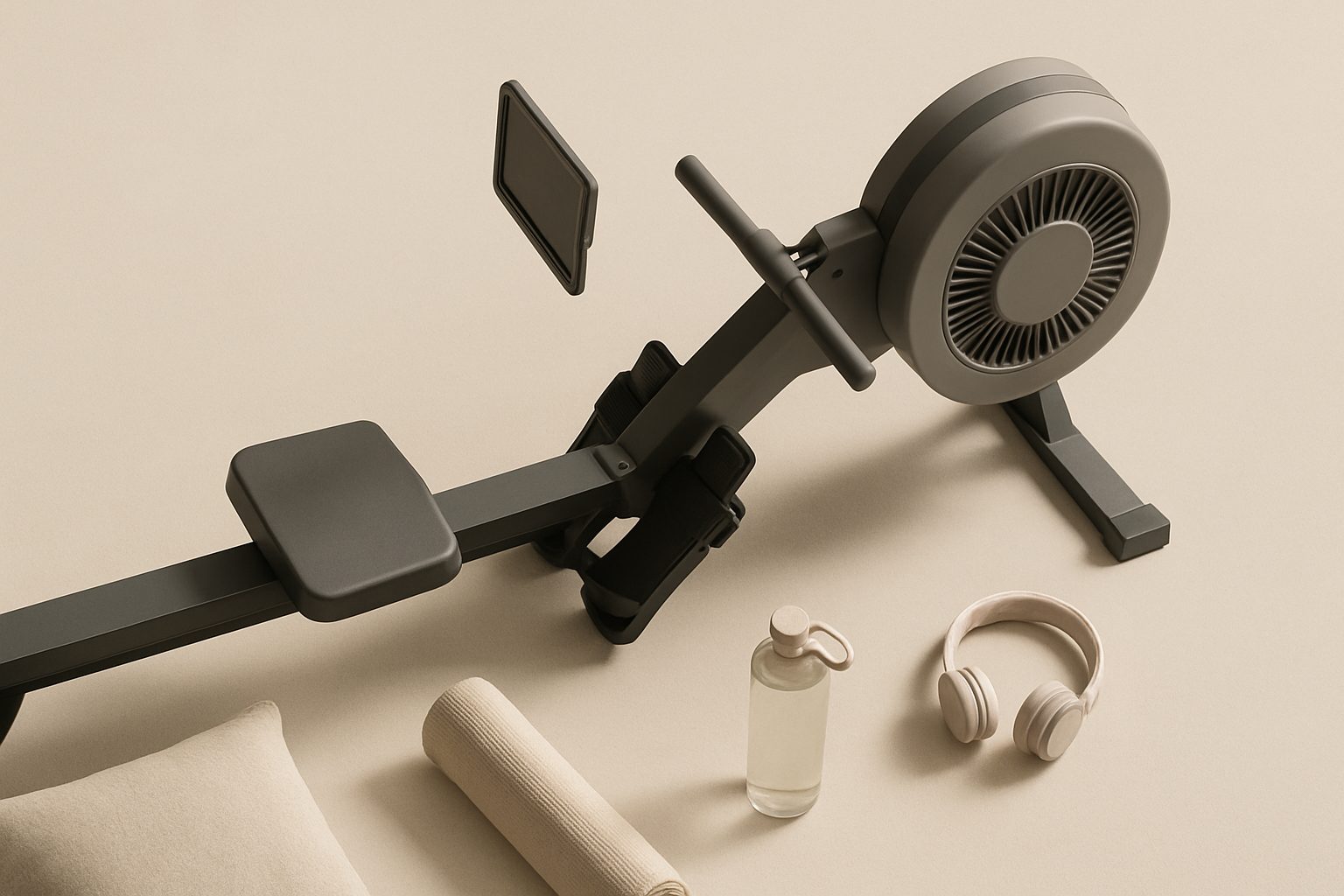
Rowing Machine Workout Plan for Weight Loss UK: 8-Week Programme
Rowing is one of the most effective full-body cardio workouts for weight loss. It engages around 85% of your muscles, burns significant calories, and—done consistently—builds lean muscle that keeps your metabolism elevated. This 8-week programme combines high-intensity intervals with steady-state sessions to create a sustainable deficit without burnout.
Why Rowing Works for Weight Loss
A 30-minute rowing session can burn 200–400 calories depending on your intensity and body weight, making it competitive with cycling and running. Unlike repetitive pounding on a treadmill, rowing distributes the workload across your legs, core, back, and arms, reducing injury risk whilst maximising calorie expenditure.
The real advantage for weight loss is consistency. Most people find rowing more sustainable than running because it's lower-impact on joints. You'll also build muscle endurance, which increases your resting metabolic rate—meaning you burn more even on rest days.
How This Programme Works
The plan alternates between HIIT (high-intensity interval training) and steady-state aerobic sessions. This approach is well-established for fat loss: HIIT sessions create metabolic disturbance and excess oxygen consumption after exercise; steady-state builds aerobic capacity and burns calories without excessive fatigue.
You'll train five days per week, with two complete rest days. This balance allows recovery whilst creating sufficient volume for results.
Before You Start
Check your form. Poor rowing technique reduces calorie burn and invites injury. Your legs drive the movement (60%), followed by your core and back lean, then arm pull. Watch a form guide or take a quick session with a trainer if you're new to rowing.
Understand effort levels: When we mention intensity, we're using a 1–10 scale where 5 is conversational steady-state, 8–9 is hard effort (few words possible), and 10 is maximal sprint.
Warm up for five minutes at easy effort before every session.
Weeks 1–2: Foundation
Your goal is consistency and building work capacity.
- Monday: 20 minutes steady-state at effort level 5
- Tuesday: 8 × 1-minute intervals at effort 8, with 2-minute recovery rows at effort 4
- Wednesday: Rest
- Thursday: 25 minutes steady-state at effort 5
- Friday: 6 × 2-minute intervals at effort 8, with 2-minute recovery
- Saturday: 15 minutes steady-state at effort 5
- Sunday: Rest
Total volume: approximately 90 minutes.
Weeks 3–4: Building Intensity
Increase steady-state duration and shorten recovery between intervals.
- Monday: 25 minutes steady-state at effort 5–6
- Tuesday: 10 × 1-minute intervals at effort 9, with 90-second recovery
- Wednesday: Rest
- Thursday: 30 minutes steady-state at effort 5–6
- Friday: 5 × 3-minute intervals at effort 8, with 1-minute recovery
- Saturday: 20 minutes steady-state at effort 5
- Sunday: Rest
Total volume: approximately 115 minutes.
Weeks 5–6: Progression
Longer intervals and increased steady-state pace.
- Monday: 30 minutes steady-state at effort 6
- Tuesday: 4 × 4-minute intervals at effort 8–9, with 1-minute recovery
- Wednesday: Rest
- Thursday: 35 minutes steady-state at effort 5–6
- Friday: 12 × 90-second intervals at effort 8, with 90-second recovery
- Saturday: 20 minutes at effort 6
- Sunday: Rest
Total volume: approximately 135 minutes.
Weeks 7–8: Peak and Consolidation
Longer work intervals and sustained higher intensity.
- Monday: 35 minutes steady-state at effort 6
- Tuesday: 3 × 6-minute intervals at effort 8–9, with 2-minute recovery
- Wednesday: Rest
- Thursday: 40 minutes steady-state at effort 5–6
- Friday: 8 × 2-minute intervals at effort 9, with 1-minute recovery
- Saturday: 25 minutes at effort 6
- Sunday: Rest
Total volume: approximately 150 minutes.
Critical Tips for Results
Eat in a modest deficit. Rowing burns calories, but weight loss requires a calorie deficit. Aim for 300–500 calories below maintenance through a combination of exercise and diet. Don't under-eat; this makes recovery impossible and abandonment likely.
Track progression, not just effort. Note your distance covered in each session. You should cover more distance at the same effort as the weeks progress. This objective marker keeps you honest.
Don't skip warm-ups or cool-downs. A five-minute warm-up increases heart rate gradually and prepares muscles. A five-minute cool-down aids recovery.
Rest days matter. Your body adapts during rest, not during exercise. Two full rest days weekly is minimum. If you feel persistently fatigued or sore, take an extra day.
Adjust by feel. If you're genuinely exhausted, reduce one interval session's intensity that week. If the plan feels easy, add 10% to steady-state duration rather than jumping to week 5 early. Consistency beats perfection.
What to Expect
In weeks 1–2, you'll notice fatigue and muscular soreness in your legs and back. This is normal and passes. By week 3, recovery improves markedly.
Weight loss varies, but combined with a sensible diet, expect 1–1.5 kilos per week. Some fluctuation is normal due to water retention and glycogen depletion.
Halfway through the plan, you'll feel fitter—breathing easier at the same effort, recovering faster between intervals.
Moving Forward
After eight weeks, reassess. Repeat the plan at slightly higher intensity, or introduce variety: longer aerobic rows, different interval structures, or complementary strength work.
For more detail on rowing's metabolic impact, check dedicated calorie-burn resources. When you're ready to upgrade equipment, explore reviews of machines ranked specifically for weight-loss training.
Consistency over perfection will deliver results.
More options
- Concept2 RowErg Indoor Rowing Machine (Amazon UK)
- WaterRower Natural Rowing Machine (Ash Wood) (Amazon UK)
- Bluefin Fitness Sprint 2.0 Magnetic Rowing Machine (Amazon UK)
- JLL R200 Home Rowing Machine (Amazon UK)
- Jorvik Tri-Mode Water Rowing Machine (Amazon UK)